Ecommerce Business

Written by

Bogdan Rancea

Updated

Reviewed By Our team of writers and content creators are experts in ecommerce and we fact-check every claim in our work to ensure it’s accurate and up-to-date. (Learn about our editorial guidelines.).

Shopify vs Depop: Fees, Features, and Which to Choose

Shopify and Depop both help you sell fashion online, but they are not really competing for the same job.

Shopify is a full commerce platform for building and scaling your own branded store, while Depop is a peer-to-peer marketplace built around fashion resale, discovery, and social selling.

So the honest question is not “which one is better,” but “which business model is each one built to win.” I’ve compared both on running costs, selling features, audience reach, marketing, ease of starting, and long-term growth to help you decide.
Read more

Shopify vs Bluehost: Which Is Better for Your Online Store?

Shopify and Bluehost are both names you will run into when you start pricing out an online store, but they are not really the same kind of product.

After hands-on testing of both, the short answer is this: if your main goal is to sell online with as little technical overhead as possible, Shopify is the better choice.

Bluehost is a web host you pair with WordPress and WooCommerce, so it suits content-led sites where a store is just one piece of the picture.

That distinction shapes everything that follows.

Read more

Shopify vs Bandcamp: Which Is Better for Selling Your Music?

Shopify and Bandcamp both help musicians and creators sell directly to fans, but they solve very different problems.

One is a full ecommerce platform built for branded, standalone online stores. The other is a music-first marketplace with discovery baked in.

We have spent dozens of hours testing direct-to-fan tools, modeling the fee math, and weighing where each one actually pays off for independent artists.

The short version: Shopify is the better long-term home if you are building a brand and want to keep more of every sale, while Bandcamp is the stronger starting point if you want built-in discovery and zero monthly overhead.

Read more

Shopify vs Booqable: When to Sell, When to Rent, and When to Run Both

Shopify and Booqable both promise to get your business selling online, but they are built for very different jobs. Shopify is a general-purpose commerce platform that handles physical and digital products across web, social, and in-person channels.

Booqable is rental management software, designed around bookings, availability, and inventory that goes out the door and comes back. The honest framing is not “which one wins,” but “when do you use one, and when do you run both together.”

To work that out, I spent weeks setting up test accounts on both platforms: running through onboarding, building catalogs, processing mock orders, and pushing each tool into the use cases it was not designed for.

This comparison walks through pricing, selling features, rental logic, inventory, checkout, marketing, and the combined Shopify plus Booqable setup, so you can match the right stack to your actual business model.

Read more

Printify vs Redbubble (2026): Which Print-on-Demand Platform Actually Pays Better?

Printify and Redbubble are two of the most popular print-on-demand platforms, but they take fundamentally different approaches to selling custom products online.

We have spent dozens of hours analyzing both platforms, testing the dashboards, and modeling the math on real product margins.

Based on that work, Printify is the clear winner if you want to build a real ecommerce business around print-on-demand.

Read more

Printful vs Society6: Which Print-on-Demand Platform Wins?

Printful and Society6 are two of the biggest names in print on demand, but they operate in fundamentally different ways.

We’ve spent over 150 hours researching and analysing the leading POD platforms to help you decide which is right for your business.

Based on our testing, Printful is the clear winner if you want to build and grow a real ecommerce brand.

Read more

Fourthwall vs Printify: Which Print-on-Demand Platform Is Better?

Fourthwall and Printify are two of the biggest names in print-on-demand (POD), but which one is the better fit for you?

I’ve spent hours testing both print on demand platforms to give you a clear comparison so you can make the right choice.

After all my testing, Printify is the better option if you want full control over pricing, products, and fulfillment.

But if you’re a creator looking for an all-in-one branded merch store with zero hassle, Fourthwall is the way to go.

Read more

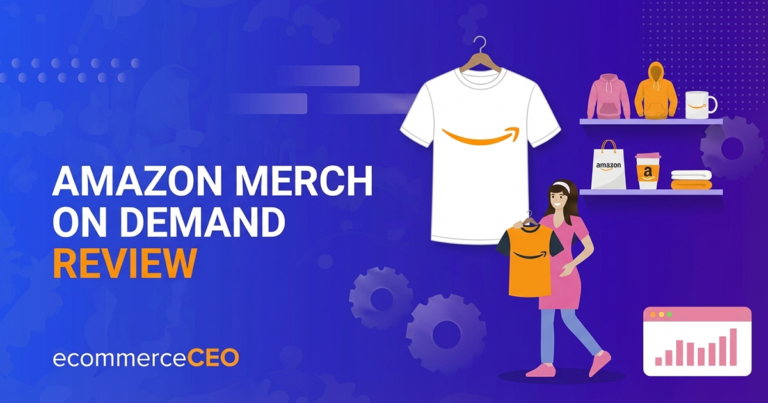
Amazon Merch on Demand Review: What Sellers Need to Know

amazon merch on demand review

Amazon Merch on Demand is one of the few print-on-demand programs where you can put your designs in front of millions of shoppers without running a single ad or building a store from scratch.

That built-in audience is genuinely valuable. But it comes with real trade-offs: limited branding control, an opaque approval process, upload caps that slow early growth, and margins set entirely by Amazon.

Our research team has spent hours reviewing the platform, testing the workflow, and comparing it against other print-on-demand options. In this review, I’ll walk through how Amazon Merch on Demand works, what it costs, where it excels, and where it falls short, so you can decide whether it belongs in your ecommerce strategy.

Read more

Best Society6 Alternatives: 5 POD Platforms Reviewed

Society6 has been a go-to print-on-demand platform for artists and designers for over a decade. Its curated home decor catalog and design-forward aesthetic made it a popular choice for anyone looking to sell art prints, throw pillows, and phone cases without managing inventory.

But Society6 isn’t the same platform it was a year ago.

In early 2025, the company shifted to a curated, invite-only model, removing thousands of artist accounts in the process. Markups are now fixed at 5–10% depending on the product, and artists can no longer set their own prices.

Read more

Spocket vs Sellvia: Which Dropshipping Supplier Is Right for You?

Spocket and Sellvia are two of the most popular dropshipping platforms available, but which one actually gives your business the best chance to succeed?

To find out, I compared both platforms in-depth across 9 key areas — from shipping and supplier quality to automation and product range.

Based on this hands-on analysis, Sellvia comes out on top if you want fast US delivery and plug-and-play sales tools.

Spocket, on the other hand, offers more flexibility and international reach.

Read more

Tapstitch vs Printify 2026: Which Print-on-Demand Platform Is Better for Serious Brands?

After spending weeks testing both Tapstitch and Printify across multiple product categories, store integrations, and sample orders, I can say these two platforms are solving fundamentally different problems. Tapstitch is the POD service you pick when you’re building a fashion brand. Printify is what you pick when you’re building a business.

That’s not a knock on either. It’s just how they’re wired. Tapstitch controls its own production, uses its own heavyweight blanks, and caters almost exclusively to apparel sellers who care deeply about fabric weight, garment fit, and the kind of unboxing experience that makes customers come back. Printify connects you to around 90 print providers worldwide, gives you 1,300+ products across every category imaginable, and lets you optimize for price, region, and turnaround on a per-product basis.

Read more

Best Print on Demand Sites for Artists (2026)

After years of navigating the print-on-demand space, I’ve tested and compared a wide range of platforms to find out which ones truly serve the needs of artists. Whether you’re looking to build your own brand, earn passive income, or scale an online store globally, there’s a solution for you — but the best fit depends entirely on your goals.

In this guide, I’ve broken down the top print-on-demand platforms based on real-world usage, updated pricing, earnings models, and ease of use. Some platforms offer full control with your own storefront, while others bring built-in traffic but ask you to play by their rules.

Read more

Featured on

BigCommerce
Entrepreneur
The Next Web
Shopify
X-Cart
Forbes
SEMRUsh
Econsultancy
Hubspot
Backlinko
shopify-first-one-dollar-promo-3-months
Close the CTA