Shopify and Bumpa are two very different ecommerce platforms, but for a growing number of African merchants the choice between them is real.
We spent over 40 hours testing both, signing up, building stores, processing test orders, and comparing them across pricing, features, mobile experience, and payments.
Shopify is the stronger platform for global scale and feature depth, while Bumpa is the better fit if you’re running a small business in Nigeria or West Africa and managing everything from your phone.
Shopify vs Bumpa: Quick Verdict
- Shopify – Best overall for scaling brands and international selling
- Bumpa – Best for small Nigerian and West African businesses selling through social channels
In this comparison, I’ll walk through how Shopify and Bumpa stack up on pricing, sales features, mobile experience, payments, design, and support, and explain which type of business each one is built for.
Note: Pricing and feature details were verified at the time of writing. Both platforms update plans and rates periodically, so confirm current pricing on the official websites before signing up.
Quick Comparison: Shopify vs Bumpa
Here’s a side-by-side snapshot of how the two platforms compare:
| Feature | Shopify | Bumpa |
|---|---|---|
| Starting price | $5/month (Starter), $29/month (Basic, billed annually) | Free plan, paid plans from around N5,000/month (~$3–$4) |
| Free trial | 3 days | 14 days |
| Best for | Scaling brands, international sellers, content-driven stores | Nigerian and West African microbusinesses, social sellers |
| Mobile experience | Strong mobile app, but desktop-first for setup | Built mobile-first, full store management from phone |
| Payment gateways | 100+ globally; Shopify Payments unavailable in most of Africa | Paystack, Flutterwave (cards, transfer, USSD, mobile money) |
| App store | 8,000+ third-party apps | No app store; closed feature set |
| Sales channels | Instagram, TikTok, Facebook, Amazon, eBay, Google, and more | Instagram, WhatsApp, SMS |
| POS | Shopify POS (online + offline sync) | POS and barcode scanner on Growth plan |
| Templates/themes | 13+ free, 180+ premium themes | Limited storefront layouts, no theme marketplace |
| Support | 24/7 chat, phone, large community | In-app support, help center, local team |
Best for Pricing: Bumpa
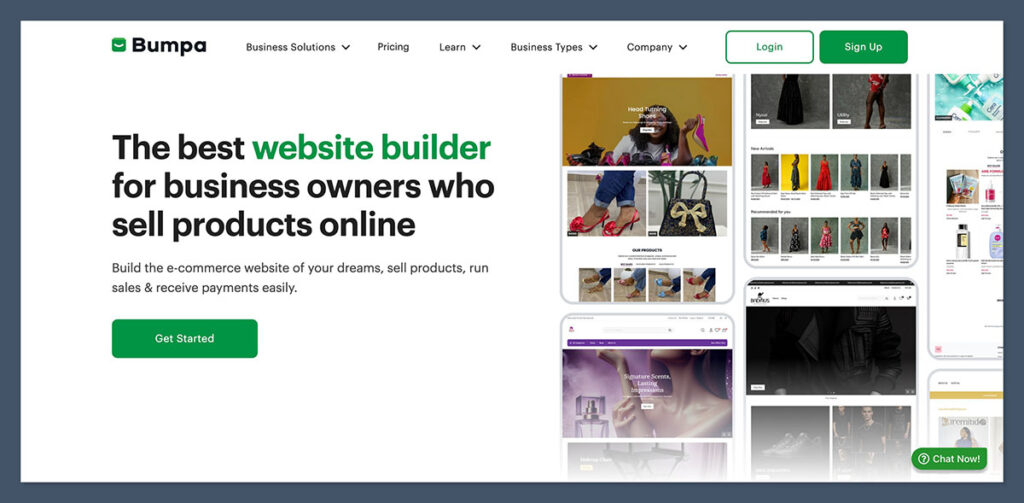
If budget is the deciding factor, Bumpa wins comfortably. Shopify’s monthly plans are priced for global merchants in USD, while Bumpa charges in Nigerian Naira at price points designed for small local businesses.
Shopify offers four main plans, and as of 2026 the middle tier is now called Grow rather than Shopify. Prices are higher than they were a year ago, with the standard Basic, Grow, and Advanced plans saving roughly 25% if you commit to annual billing:
- Starter – $5 per month (link-in-bio and social selling, not a full storefront)
- Basic – $39 per month, or $29 with annual billing
- Grow – $105 per month, or $79 with annual billing
- Advanced – $399 per month, or $299 with annual billing
- Shopify Plus – from $2,300 per month for enterprise
Shopify also runs a promotional offer of $1 per month for the first three months on the standard plans, and includes a 3-day free trial with no credit card required. On top of the subscription, you’ll pay credit card processing fees (2.4%–2.9% + $0.30 on Shopify Payments where available), plus an additional 0.5%–2% transaction fee if you use a third-party gateway like Paystack or Flutterwave. Apps and premium themes add further costs.
Bumpa’s pricing looks completely different. There’s a free plan that includes a basic .bumpa.shop storefront, product listings, and order tracking. Paid plans are billed quarterly, bi-annually, or annually:
- Free – product listing, basic CRM, WhatsApp receipts
- Starter – around N5,000 per month (roughly $3–$4 at current rates)
- Pro – around N10,000 per month (roughly $7–$8)
- Growth – from N250,000 per year (POS, barcode scanner, multi-location)
Bumpa offers a 14-day free trial, which is far more generous than Shopify’s 3-day window, and there are no platform transaction fees on top of the subscription. You’ll still pay gateway fees through Paystack or Flutterwave, but you don’t get hit with an extra Shopify-style platform fee.
The catch with Shopify is that the subscription is only part of the total cost. Most Shopify stores end up paying $100–$300 per month for apps to match features that competitors include natively, and premium themes are a one-time charge of $100–$500. Bumpa keeps its feature set closed, which means fewer add-ons but also fewer surprise costs.
The Winner
Bumpa is the more affordable option for small businesses. Prices are denominated in Naira, there’s a usable free plan, and total cost of ownership is predictable. Shopify is a real investment that only makes financial sense once you’re processing meaningful volume or selling into higher-value markets.
Best for Selling Online: Shopify

When it comes to pure ecommerce capability, Shopify is in a different league. Bumpa has the essentials covered for small local businesses, but Shopify offers the depth that scaling brands need.
Sales Features
Shopify gives you full product management with variants for sizes, colors, and materials, advanced discount rules, abandoned cart recovery on every standard plan, gift cards, customer segmentation, and detailed analytics.
You can sell across an enormous range of channels including TikTok, Instagram, Facebook, Amazon, eBay, Google, and Walmart, and Shopify Magic uses AI to help generate product descriptions, edit images, and write marketing copy.
Bumpa’s sales feature set is intentionally simpler. You get a product catalog with basic stock management to prevent overselling, a lightweight CRM that stores customer names, birthdays, and order histories, and the ability to send invoices and receipts via WhatsApp or SMS.
There’s broadcast messaging for promotions and discount tools, but no abandoned cart recovery, no complex discount engines, and no AI-driven content tools.
The gap is significant. If your business depends on running abandoned cart flows, segmenting customers, or selling across multiple marketplaces, Shopify is the only realistic option of the two.
Payment Options
This is where things get interesting for African merchants. Shopify supports over 100 payment gateways and wallets globally, including Stripe, PayPal, Apple Pay, and Google Pay.
However, Shopify Payments isn’t available in most African countries, including Nigeria, which means you have to use third-party gateways like Paystack or Flutterwave through apps. When you do, Shopify charges an additional platform transaction fee of 0.5%–2% on top of whatever the gateway charges.
Bumpa is built around local payment rails. Paystack and Flutterwave are integrated directly, with support for cards, bank transfers, USSD, and some mobile money options.
Setup is significantly faster than configuring the same gateways through Shopify, and there’s no platform-level transaction fee on top of the gateway’s own charges.
For a Nigerian merchant selling primarily in Naira, Bumpa’s payment setup is cleaner and cheaper. For a merchant selling across multiple currencies and countries, Shopify’s broader coverage is worth the extra complexity.
App Market and Extensibility
Shopify’s app store has more than 8,000 third-party apps covering everything from email marketing and reviews to subscriptions, loyalty programs, and shipping. This is one of Shopify’s biggest competitive advantages and also one of its biggest hidden costs, since most stores end up needing several paid apps to match what competitors offer out of the box.
Bumpa has no app store.
The feature set is what you get, expanded only when Bumpa itself releases new functionality. For a microbusiness, this is a feature rather than a bug, since there’s less to learn and no subscription creep. For a brand that wants to bolt on advanced features like one-click upsells or custom subscription billing, it’s a hard limit.
The Winner
Shopify is the more capable ecommerce platform. Variants, abandoned cart recovery, multichannel selling, deep analytics, and a massive app ecosystem give Shopify the edge for any business that needs more than a simple catalog and checkout.
Best for Mobile Selling: Bumpa
This is where Bumpa genuinely outperforms Shopify, and it’s the single biggest reason to choose it for the right use case.
Bumpa is mobile-first by design. You can run almost the entire business from your phone: list products, manage inventory, send invoices and receipts via WhatsApp, track customers, change your storefront theme color, edit banners, reorder products, and update store info. The onboarding flow is built around someone who’s already selling in Instagram DMs and wants to move to a more structured workflow without learning a desktop dashboard.
Shopify’s mobile app is genuinely strong for day-to-day management. You can process orders, update inventory, manage customer messages, and make basic edits. But Shopify is still a fundamentally desktop-first platform. Building your store, customizing themes properly, configuring shipping zones, installing apps, and managing complex settings all work much better on a laptop or desktop.
For a Nigerian merchant whose primary computing device is a smartphone, this difference is substantial. Bumpa lets you go from no store to a shareable link in under an hour, all from your phone. Shopify expects you to sit at a computer.
The Winner
Bumpa is the better mobile-first platform. If you primarily run your business from a phone and your customers already shop through Instagram or WhatsApp, Bumpa fits the workflow far better than Shopify.
Easiest to Use: Bumpa
Shopify is widely considered one of the more user-friendly ecommerce platforms, but Bumpa is simpler still, partly because it does less.
Signing up for Bumpa takes a few minutes inside the mobile app. You enter your store name, upload a logo, write a short description, pick a currency, and you have a working storefront link. The dashboard surfaces orders, products, customers, and analytics in a clear vertical layout designed for a phone screen.
Shopify’s onboarding starts with a few questions about your business stage and what you plan to sell, then drops you into the admin dashboard with a setup checklist.
The dashboard is more complex than Bumpa’s because it has to surface more functionality: themes, apps, navigation, shipping zones, tax settings, payment providers, sales channels, and analytics all need configuration. Most new merchants can launch a basic Shopify store in a day, but it’s a different commitment than Bumpa’s hour.
Neither platform uses a true drag-and-drop editor. Shopify uses a section-based theme editor where you stack components like image carousels, featured collections, and contact forms. Bumpa’s storefront customization is even more limited, focused on colors, banners, and product display order rather than full page composition.
The Winner
Bumpa is easier to learn and launch. The trade-off is real, though: Bumpa is easier because it’s narrower. Shopify takes longer to set up because it offers significantly more to configure.
Best Design and Templates: Shopify
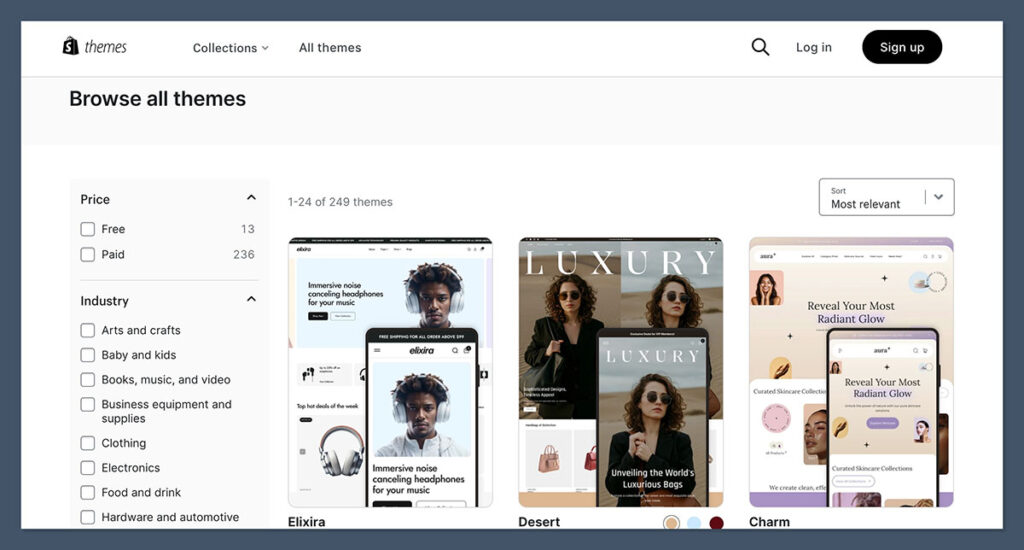
If you care about the look of your storefront, Shopify is the clear winner. Bumpa’s design system is functional but limited.
Shopify offers 13 free themes and more than 180 premium themes, with prices ranging from $180 to $500 as one-time purchases. Themes are responsive, organized by industry, and cover everything from minimalist fashion stores to content-heavy editorial brands.
Developers can edit themes directly using Liquid, HTML, and CSS, and the app ecosystem adds page builders, custom section libraries, and animation tools.
Bumpa doesn’t have a theme marketplace in the same sense. You get a small set of storefront layouts and can adjust colors, banners, logos, and product display, but the storefront is closer to a smart product catalog than a fully designed website. There’s no built-in blog, no content marketing tools, and no equivalent to Shopify’s section-based theme editor.
For a brand that wants a distinctive visual identity, custom landing pages, or content marketing built into the same platform as the store, Shopify is the obvious choice.
For a merchant whose customers primarily arrive through a WhatsApp or Instagram link and just need a checkout, Bumpa is enough.
The Winner
Shopify offers far more design flexibility. A large theme library, deep customization, and a content-friendly architecture make Shopify the better choice for design-led brands.
Best for International Selling: Shopify
Shopify is built for global commerce in a way Bumpa isn’t.
Shopify Markets, the platform’s internationalization layer, supports multi-currency selling, localized domains, translated storefronts in over 30 languages, automatic tax calculation, and multi-location inventory. Customers in different countries can shop in their local currency, see prices adjusted for their region, and check out using local payment methods. For brands selling cross-border, this is essential.
Bumpa is regionally focused. Pricing is in Naira, integrations are with local Nigerian gateways, and logistics tools are oriented around West African delivery. Some Bumpa plans support USD payments, but there’s no full multi-currency storefront management, no language translation, and no advanced international shipping engine.
If your business sells outside Nigeria or has any ambition to reach customers in the EU, US, or UK at scale, Shopify is the right platform. Bumpa is excellent for local selling but isn’t built to support a brand operating in five currencies.
The Winner
Shopify is the platform of choice for international selling. Multi-currency, language translation, and global payment coverage make Shopify the clear winner for any cross-border ambitions.
Best for Business Support: Tie
Both platforms offer solid support, with different strengths.
Shopify Support
- 24/7 live chat through the Help Center, with handoff to human Support Advisors for complex queries
- 24/7 phone support for Shopify Plus merchants
- Social media support across X, Facebook, Instagram, TikTok, LinkedIn, and YouTube
- Extensive Help Center with guides, video tutorials, business courses, and a large community forum
- Massive ecosystem of agencies, freelancers, and Shopify Experts for paid implementation help
- Email support has been removed in favor of chat
Bumpa Support
- In-app support and live chat from a Nigeria-based team
- Help center with documentation on setup, payments, and store management
- Active community on Instagram and WhatsApp where merchants share tips
- Local team that understands Nigerian logistics, payments, and regulations
- Smaller ecosystem of third-party experts compared with Shopify
- Response times can be slower than Shopify’s 24/7 chat during peak hours
Shopify wins on breadth and 24/7 availability. Bumpa wins on local context: support agents who understand Paystack, Flutterwave, and the realities of selling in Lagos. For a Nigerian merchant, Bumpa’s local-first support often resolves issues faster than a global Shopify chat agent would.
The Winner
It depends on what you need. Shopify is better for round-the-clock access and a huge ecosystem of experts. Bumpa is better for local context and Nigeria-specific issues.
How We Test Ecommerce Platforms
We tested Shopify and Bumpa across the same areas we use to evaluate every ecommerce platform, weighted by how much each matters to small and growing online businesses:
- Sales features (35%) – product management, checkout, abandoned cart recovery, discounts, multichannel selling
- Payments and gateways (15%) – gateway coverage, transaction fees, local payment support
- Ease of use (15%) – onboarding, dashboard clarity, mobile experience
- Design and templates (10%) – theme library, customization depth, storefront quality
- Help and support (10%) – channels, response times, documentation, community
- Value for money (10%) – pricing, hidden costs, total cost of ownership
- Internationalization (5%) – multi-currency, translation, cross-border tools
I signed up for both platforms, built test stores, listed products, configured payment gateways, and processed test orders. Screenshots and observations throughout this comparison come from that hands-on testing.
Shopify vs Bumpa: Our Verdict
Shopify is the more powerful platform overall, and the right choice for businesses that need scalable ecommerce infrastructure, want to sell internationally, or rely on features like abandoned cart recovery, advanced analytics, and a deep app ecosystem.
If you’re a brand with ambitions beyond a single local market, Shopify is the platform built for that future.
Bumpa is the right choice for a specific kind of merchant: a small business in Nigeria or West Africa that’s already selling through Instagram, WhatsApp, or direct messages, and wants a structured workflow they can run from a phone.
The pricing is built for local economics, payments work natively with Paystack and Flutterwave, and the entire product is designed around mobile-first commerce.
A useful way to think about it: Bumpa is where many African ecommerce businesses should start, and Shopify is where some of them should eventually move once they’re scaling internationally or need features Bumpa doesn’t offer. Neither platform is universally better. The right one depends on where you sell, how you sell, and where you’re trying to go.
FAQ
Is Bumpa really cheaper than Shopify?
Yes, by a significant margin for small businesses. Bumpa’s free plan covers the basics, and paid plans start at around N5,000 per month. Shopify’s cheapest full-store plan is $29 per month with annual billing, and most stores end up paying another $100 or more per month on apps. For a Nigerian microbusiness, Bumpa’s total cost of ownership is much lower.
Can I sell internationally with Bumpa?
Bumpa supports USD payments on some plans, but it’s not built for full international selling. There’s no multi-currency storefront, no language translation, and no advanced cross-border shipping engine. If you sell outside Nigeria and West Africa at any meaningful scale, Shopify is the better choice.
Does Shopify work well in Nigeria?
Yes, but with caveats. Shopify Payments isn’t available in Nigeria, so you’ll need to use Paystack or Flutterwave through third-party apps, which adds an extra Shopify platform fee of up to 2% on each transaction. Shopify also charges in USD, which can make the subscription feel expensive when Naira fluctuates.
Can I move from Bumpa to Shopify later?
Yes. Many merchants start on Bumpa to validate their business and migrate to Shopify once they’re scaling internationally or need features Bumpa doesn’t support. You’ll need to export your products and customers and rebuild the storefront, but it’s a standard migration that agencies and freelancers handle regularly.
Which platform is better for an Instagram boutique?
If you’re a small Instagram or WhatsApp seller in Nigeria, Bumpa is almost certainly the better starting point. The mobile-first workflow, WhatsApp receipts, and Naira pricing all fit how Nigerian social sellers actually operate. Shopify becomes the better fit once your catalog grows, you start selling abroad, or you need features like abandoned cart recovery and advanced analytics.
Does Bumpa have a free trial?
Yes. Bumpa offers a 14-day free trial of its premium features, which is considerably more generous than Shopify’s 3-day window. You can also use Bumpa’s permanently free plan with basic features at no cost.